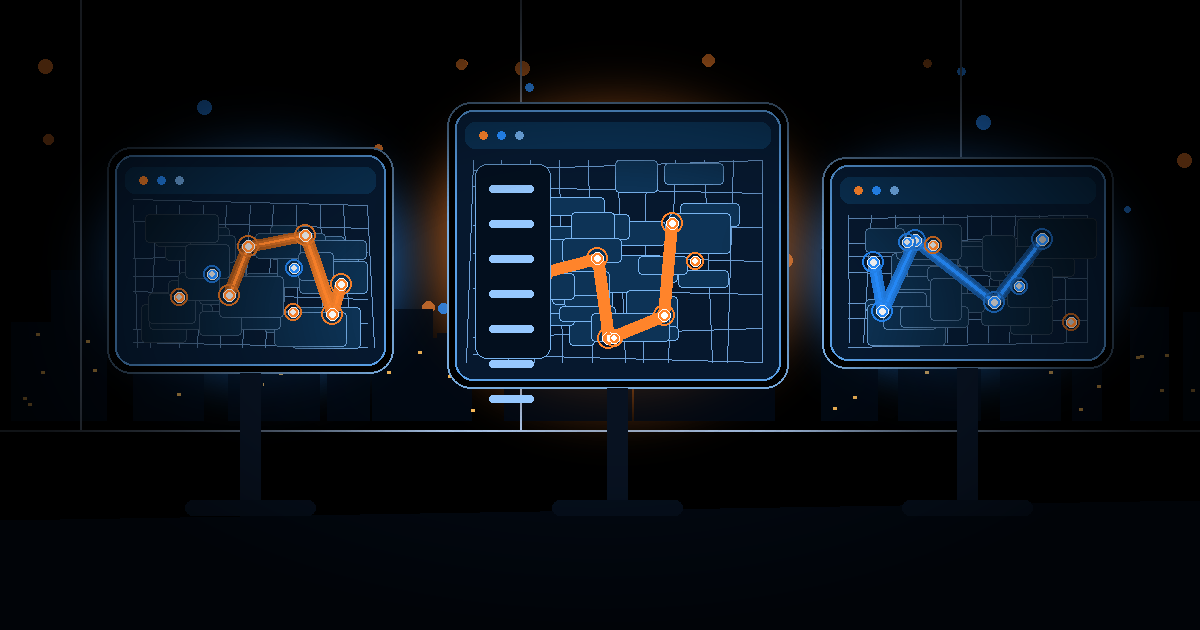
Defining route density
Density is the number of stops served relative to distance travelled (or time spent). A route of 40 stops over 60 km is twice as dense as 40 stops over 120 km. This easy-to-compute ratio is one of the best predictors of last-mile profitability.
Why it's the right metric
The last mile concentrates up to 41% of supply-chain costs, according to the Capgemini Research Institute, and those costs are mostly fuel and driver hours. Both depend directly on distance and time, hence on density. The tighter your stops, the more deliveries each kilometre "produces". Revenue, by contrast, can hide a structurally loss-making route.
What destroys density
- Delivery zones that are too broad or poorly carved up;
- Rigid time windows that prevent grouping nearby stops;
- Isolated orders accepted far from the bulk of the route;
- Manual planning unable to optimise stop order.
The hidden cost of failures
Density is computed on successful deliveries. A failure is a stop "consumed" with no value produced, and costly: per Statista, a failed delivery runs about $17.2 in the US and £11.6 in the UK per parcel. So improving density also means cutting failures (slots, notifications).
How to improve it
Tighten zones, negotiate reasonable time windows, optimise stop order automatically, and measure density route by route. dropfleet shows distance and stop count before/after optimisation: density becomes a steered lever, not fate.
- Density = stops per kilometre (or per hour)
- It predicts margin better than revenue, since the last mile = 41% of costs
- A failure costs ~$17.2 / ~£11.6 per parcel (Statista) and hurts density
- Levers: tighter zones, flexible windows, optimised order
Steer density, steer margin. Try dropfleet free for 14 days, no credit card, ready in 5 minutes.
Sources
This article is based on verifiable public sources: